
Commercial Roofing
A commercial roof leak can quickly turn from a minor maintenance issue into a costly facility problem. Water intrusion can damage building materials, disrupt operations, affect equipment, and create potential safety concerns for employees and visitors.
For facility managers and property owners, knowing how to recognize the early warning signs of a leaking commercial roof is an important part of protecting the building and avoiding more extensive repairs.
At Connect Service Solutions, we understand that maintaining a facility requires looking at the entire building—not just one system. Recognizing potential roof problems early and taking the appropriate next steps can help minimize damage, protect operations, and extend the service life of your facility.
Here are seven common signs that could indicate your commercial roof is leaking.
One of the most recognizable signs of a commercial roof leak is discoloration on ceilings, walls, or ceiling tiles.
Brown, yellow, or rust-colored stains may indicate that water has entered the roofing system and traveled into the building. Because water can move along roof decks, structural components, pipes, and other building materials before becoming visible, the location of a stain does not always identify the source of the leak.
Pay particular attention to:
Areas directly beneath the roof
Corners where walls and ceilings meet
Ceiling tiles and suspended ceiling systems
Areas surrounding HVAC units
Roof penetrations, pipes, vents, and equipment
Previous leak or repair locations
If you notice water stains, document their location and appearance. Photos can help maintenance teams track whether the affected area is changing over time and provide valuable information during a professional commercial roof inspection.
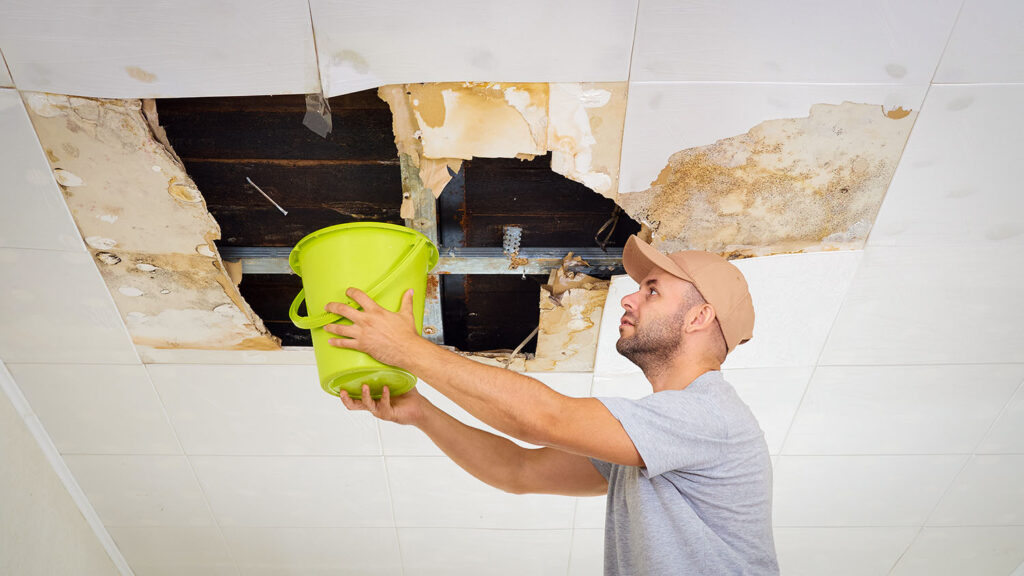
Active dripping or water pooling inside a building is a clear indication that water intrusion needs immediate attention.
Commercial roofing systems can be complex, and the point where water appears inside the facility may be several feet—or even farther—from the actual source of the roof leak.
Water can travel along structural components, insulation, decking, and mechanical systems before reaching an interior space. This can make commercial roof leak detection difficult without a thorough inspection.
If active water intrusion is discovered:
Protect people and equipment in the affected area
Move valuable materials when it is safe to do so
Use containers to collect dripping water
Mark or document affected areas
Contact a qualified commercial roofing professional
Prompt action can help reduce interior damage and minimize disruption to your facility.
Not every commercial roof leak produces visible water immediately.
A persistent musty or damp smell can indicate moisture trapped above ceilings, inside walls, or within the roofing and insulation systems. Because commercial roofs often contain multiple layers of insulation and other materials, moisture may remain hidden for an extended period before visible damage appears.
Check:
Storage rooms
Mechanical and utility spaces
Areas above suspended ceilings
Spaces with limited ventilation
Areas surrounding rooftop HVAC equipment
Locations with a history of water intrusion
If an unexplained odor persists, a professional roof and moisture assessment may help determine whether hidden water intrusion is contributing to the problem.
Signs of a roof problem are not always found inside the building.
Unusual concentrations of moss, mildew, algae, or vegetation around exterior walls, drainage systems, or rooflines may indicate areas where moisture is consistently collecting.
Facility teams should pay close attention to:
Gutters and downspouts
Roof drains
Scuppers
Drainage outlets
Exterior walls near rooflines
Areas with concentrated vegetation or mildew
Locations where water does not drain properly
These conditions do not automatically mean the roof is leaking, but they can indicate drainage or moisture problems that warrant further inspection.
Routine exterior inspections can help identify potential commercial roofing issues before they result in interior water damage.
An increase in heating or cooling costs may have several causes, but roof-related moisture is one possibility that facility managers should consider.
When water enters a roofing system and saturates insulation, the insulation may become less effective. That can make it more difficult for the building to maintain consistent indoor temperatures and may cause HVAC systems to work harder.
Potential indicators include:
Unexplained increases in utility costs
Difficulty maintaining consistent temperatures
Hot or cold areas within the facility
Wet or damaged roof insulation
Changes in HVAC runtime or performance
Energy performance alone cannot confirm a roof leak. However, when higher utility costs occur alongside other signs of roof water damage, a commercial roof inspection may be appropriate.
Water and electrical systems can create serious safety hazards.
If electrical issues occur near an area where a commercial roof leak is suspected, the situation should be treated carefully and addressed by qualified professionals.
Warning signs may include:
Flickering lights
Repeatedly tripped breakers
Equipment malfunctions
Unusual electrical odors or sounds
Visible water near electrical equipment, outlets, or wiring
Do not attempt to investigate electrical components exposed to water unless you are trained and authorized to do so.
Restrict access to the affected area and contact the appropriate electrical and roofing professionals to evaluate the situation safely.
Visible deterioration of interior building materials can indicate that water intrusion has been occurring for some time.
Common examples include:
Sagging ceiling tiles
Peeling or bubbling paint
Warped wall panels
Damaged drywall
Deteriorating insulation
Stained or damaged flooring
Corrosion on metal components
These conditions may indicate that moisture has moved beyond the roof assembly and begun affecting other parts of the facility.
The longer water intrusion continues, the greater the potential for damage to roofing components, insulation, interior finishes, equipment, and other building systems.
Finding a leak is only the first step. A clear response plan can help protect your facility while providing roofing professionals with the information needed to investigate the problem.
Take photographs of:
Water stains
Active leaks
Damaged ceiling tiles
Affected walls and floors
Nearby equipment
Other visible signs of water intrusion
Record when the problem was discovered and whether it occurred during or after a particular weather event.
When it is safe to do so:
Move equipment and inventory away from the leak
Place containers beneath active drips
Monitor containers to prevent overflow
Restrict access to hazardous areas
Notify appropriate facility personnel
Commercial roof leaks can be difficult to diagnose because the source of the water may be located far from where it becomes visible inside the building.
A professional commercial roof inspection can evaluate the roofing system, drainage components, penetrations, seams, flashing, insulation, and other potential sources of water intrusion.
Finding water inside a building does not necessarily tell you where the roof has failed.
Water may enter through one location and travel through the roof assembly before appearing elsewhere. Simply repairing the area directly above an interior stain may not address the actual source of the problem.
A comprehensive roof leak assessment can help identify:
Potential entry points
Areas of trapped moisture
Damaged roofing materials
Drainage problems
Failed flashing or seams
Issues around rooftop equipment and penetrations
The extent of existing water damage
Accurate diagnosis helps facility teams make more informed repair and maintenance decisions.
The best time to address a commercial roof problem is often before water begins entering the building.
A proactive roof maintenance program can help identify developing problems during routine inspections and provide an opportunity to make repairs before they become emergencies.
Regular commercial roof inspections may include:
Evaluating roof membranes and surfaces
Checking seams and flashing
Inspecting penetrations
Reviewing drainage systems
Checking areas surrounding rooftop equipment
Identifying damaged or deteriorating materials
Documenting changes in roof condition
Addressing minor repairs before they become larger problems
Preventive maintenance can also provide facility managers with better visibility into the condition of their roofing assets, making it easier to plan maintenance budgets and future capital improvements.
A leaking roof rarely affects only the roof.
Water intrusion can impact HVAC equipment, electrical systems, interior finishes, building materials, safety, and day-to-day operations. That is why commercial roof maintenance should be considered as part of a broader facility management strategy.
Connect Service Solutions brings together specialized facility service companies to help organizations manage critical building systems across their portfolios. From commercial roofing and HVAC to paving, security, solar, construction, and additional facility services, our family of companies provides coordinated solutions designed to help facilities operate safely and efficiently.
Whether you are responding to an active commercial roof leak or developing a preventive maintenance strategy, early action can make a significant difference.
Think your commercial roof may be leaking? Connect with Connect Service Solutions to identify the right resource for your facility and take the next step toward protecting your building.
This will close in 0 seconds