
Access Control vs. Traditional Keys: A Smarter Approach to Facility Security
-
By Lauren Acklin
- In Facility Management Security Solutions
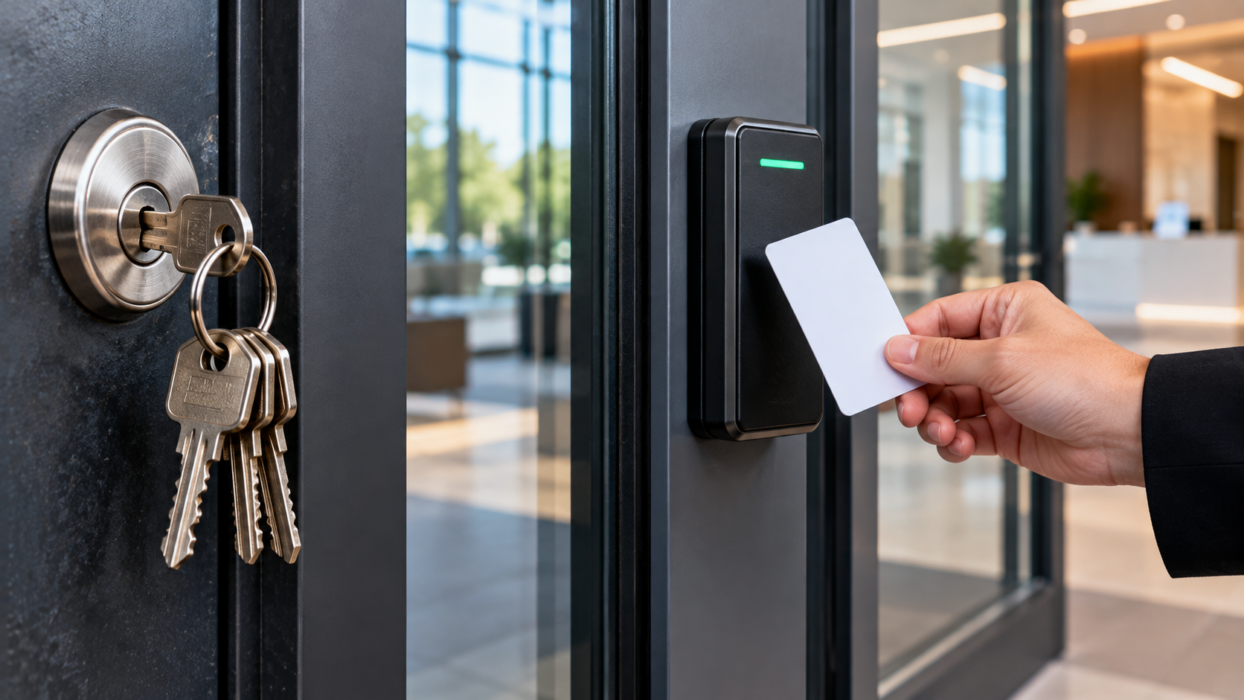
Facility Management, Security Solutions October 6, 2026 Access Control vs. Traditional Keys: A Smarter Approach to Facility Security For decades, metal keys have been the standard way to control access to commercial buildings. They are familiar, relatively inexpensive upfront, and easy to distribute. But managing keys becomes more complicated as an organization grows. Employees leave. Contractors need temporary access. Keys are lost or copied. Facilities add new locations. Sensitive areas require different levels of authorization. Eventually, what started as a simple key-and-lock system can become difficult to manage—and even harder to monitor. Electronic access control provides another approach. Badges, fobs, mobile credentials, and other electronic access technologies allow facility and security teams to manage who can enter specific areas, when they can enter, and what happens when permissions need to change. For organizations evaluating their physical security strategy, here is how traditional keys and electronic access control compare across three important areas: cost, control, and security. 1. Cost: Upfront Expense vs. Long-Term Management Traditional Keys: Simple Until Something Changes Mechanical locks typically have a lower initial cost than an electronic access control system. The challenge comes later. When a key is lost, copied, stolen, or not returned, facility teams may need to determine whether the affected lock—or potentially several locks—should be rekeyed. That can involve: Locksmith service calls Rekeying doors or lock groups Replacing keys for authorized employees Updating master-key systems Coordinating access during the transition Administrative time spent tracking and redistributing keys The larger the facility or organization, the more difficult key management can become. There is another limitation: you cannot simply deactivate a metal key. Once it leaves your control, determining where it is—or how many copies exist—can be difficult. Access Control: Greater Investment, Greater Flexibility Electronic access control generally requires a higher upfront investment because the system may include readers, controllers, electronic locking hardware, credentials, software, networking, and professional installation. The advantage is what happens after installation. If an employee loses a badge or leaves the organization, the credential can typically be disabled without changing the physical lock. Facility teams can also: Add and remove users Modify permissions Issue temporary credentials Manage access schedules Update multiple doors or locations through a centralized system For organizations with frequent personnel changes or multiple facilities, that flexibility can simplify day-to-day access management. 2. Control: Who Can Go Where—and When? Keys Control Possession A traditional key primarily answers one question: Does this person have the key? If the answer is yes, that individual can generally open the corresponding lock whenever they have physical access to it. That can make it difficult to accommodate situations where someone needs access to a space only during certain hours or for a limited period. Electronic Access Controls Permission Electronic access control changes the model from possession to permission. Depending on the system, administrators can establish access based on: Employee or department Job responsibilities Building or location Specific doors Days of the week Time of day Temporary assignments Contractor or vendor schedules For example, a vendor may be permitted to enter a mechanical area from 8:00 a.m. to 5:00 p.m. during a project without receiving the same access as a full-time facility employee. Likewise, employees can receive access to the areas required for their responsibilities without automatically receiving access to IT rooms, records storage, equipment areas, or other restricted spaces. This supports the broader security principle of least privilege: providing people with the access they need without unnecessarily expanding that access. 3. Security: From Limited Visibility to Greater Accountability Traditional Keys Provide Little Information After Entry One of the biggest limitations of a mechanical lock is what it cannot tell you. If a door is opened with the correct key, the lock itself typically does not identify: Who used the key When the door was accessed How often the space was entered Whether the key was being used by its intended holder If an incident occurs, that lack of information can make an investigation more difficult. Access Control Can Create an Activity Record Electronic access control systems can provide credential and door activity that gives security and facility teams greater visibility into building access. Depending on system configuration, administrators may be able to review information such as: Granted access attempts Denied access attempts Credential activity Door events Dates and times of activity That information can support security investigations, internal reviews, compliance requirements, and general facility management. It also creates greater accountability around sensitive spaces. 4. Credentials Can Be Matched to the Facility Access control does not mean every organization needs the same technology. Modern systems can support different credential options depending on security requirements, operations, and budget. These may include: Access cards Key fobs Mobile credentials PINs Biometric technologies Multi-factor authentication A standard office entrance, for example, may have different security requirements than a server room, pharmacy, financial records area, warehouse, or critical infrastructure space. The objective is not necessarily to install the most complex technology available. It is to select an appropriate level of security for each environment. 5. Access Can Change as Quickly as Your Organization Does Employee turnover is one of the clearest differences between keys and electronic access. With a traditional key system, an employee who leaves the organization may return the key—but facility teams still have limited visibility into whether a copy was made. With an electronic credential, access can typically be revoked as part of the offboarding process. The same flexibility can help organizations manage: New employees Employee transfers Contractors Temporary workers Vendors After-hours cleaning crews Seasonal personnel Instead of changing physical locks whenever access requirements change, administrators can update permissions within the system. For growing and multi-site organizations, this can make access management significantly easier to scale. 6. Access Control Can Be Part of a Larger Security Strategy Access control is most effective when it is not treated as an isolated system. Depending on the facility, access control may work alongside: Video surveillance Intrusion detection Intercom systems Visitor management Network infrastructure Security monitoring Emergency procedures Integrating these systems
Read More
How to Lower HVAC Costs This Fall (Without Major Upgrades)
-
- In Facility Management HVAC
Facility Management, HVAC October 6, 2026 How to Lower HVAC Costs This Fall (Without Major Upgrades) Fall is an important transition period for commercial facilities. Cooling demand begins to decrease, heating systems prepare for increased use, and facility teams have an opportunity to address HVAC inefficiencies before colder weather arrives. For large commercial buildings, this seasonal transition can also reveal opportunities to reduce operating costs. The good news is that improving HVAC efficiency does not always require replacing equipment or investing in a major system overhaul. By using fall as an opportunity to review schedules, complete preventive maintenance, optimize controls, and correct airflow issues, facility managers can reduce unnecessary energy use while preparing their buildings for the months ahead. Here are eight practical ways to lower HVAC costs this fall—without a major capital investment. 1. Adjust HVAC Schedules for Fall Your building’s summer HVAC schedule may no longer make sense as temperatures and occupancy patterns change. Fall is a good time to review operating schedules and make sure HVAC systems are not running longer than necessary. Consider: Adjusting startup and shutdown times as temperatures become milder Reducing unnecessary evening and weekend runtime Updating holiday and unoccupied schedules Reviewing temperature setpoints Adjusting schedules to reflect current occupancy Avoiding unnecessary heating and cooling during mild fall weather can help reduce energy consumption before winter arrives. 2. Complete Fall Preventive Maintenance After working through the summer cooling season, HVAC equipment may need attention before transitioning into heavier heating demand. A fall preventive maintenance inspection can help identify worn components, airflow restrictions, control issues, and other problems before they become costly winter service calls. Fall maintenance should include items such as: Replace filters. Dirty or clogged filters can restrict airflow, increase system workload, and negatively affect indoor air quality. Inspect and clean coils. Dirt and debris can reduce heat-transfer performance and make HVAC equipment work harder than necessary. Check belts, bearings, motors, and electrical components. Worn components can affect efficiency and increase the risk of unexpected equipment failure. Inspect heating equipment. Heating components that have been inactive for months should be inspected and tested before colder temperatures arrive. Preventive maintenance now can help reduce the chance of discovering a problem on the first truly cold day of the season. 3. Look for Ductwork and Airflow Problems As your building transitions from cooling to heating, fall is a good opportunity to address areas that were consistently too warm or too cold during the previous season. Inspect accessible ductwork for: Air leaks Damaged insulation Disconnected sections Deteriorated seals Blocked supply or return vents Conditioned air that escapes before reaching occupied spaces means HVAC equipment must work harder to maintain comfortable temperatures. Addressing these problems before winter can help improve both comfort and efficiency. 4. Balance the System Before Winter Does one part of the building always feel too warm while another feels too cold? Uneven temperatures may indicate an airflow or system-balancing issue. Building layouts, renovations, tenant changes, equipment adjustments, and even furniture placement can affect how conditioned air moves throughout a facility. Testing and balancing can help improve airflow distribution, reduce hot and cold spots, limit unnecessary HVAC runtime, and improve occupant comfort before heating demand increases. 5. Review Your Building Controls Fall is also an ideal time to review building automation systems, programmable thermostats, and HVAC control sequences. Check: Occupied and unoccupied schedules Heating and cooling setpoints Temperature setbacks Economizer operation Equipment staging and sequencing Simultaneous heating and cooling Zone controls Occupancy sensors During mild fall days, a properly operating economizer may be able to take advantage of favorable outdoor conditions to reduce mechanical cooling demand where system design and conditions allow. The goal is to get more value from the controls and equipment you already have. 6. Prepare Ventilation Systems for Seasonal Changes Fall temperatures can fluctuate dramatically. A cool morning can quickly become a warm afternoon, creating changing demands on commercial HVAC systems. This makes proper ventilation and control especially important. Facility teams should verify that: Outside-air dampers operate correctly Economizers function as intended Sensors and controls are properly calibrated Ventilation strategies reflect current occupancy and building use Ventilation should always meet applicable requirements and indoor air quality needs. The goal is to make sure the system is bringing in and conditioning outside air appropriately—not creating unnecessary heating or cooling loads. 7. Review Summer Energy Performance Fall provides a natural opportunity to look back at how your HVAC system performed during peak summer conditions. Review: Monthly utility costs Energy consumption Peak electrical demand Equipment runtime Maintenance history Recurring comfort complaints Unexpected repairs or service calls Were energy costs noticeably higher than last summer? Did one piece of equipment require repeated attention? Were certain areas consistently difficult to cool? These trends can help identify inefficiencies that should be addressed before the next peak season—and problems that could affect winter performance. For organizations with multiple locations, comparing energy and maintenance trends across facilities can also help identify buildings that warrant a closer look. 8. Get Your Building Ready for Heating Season The first cold day of the year should not be the first time your heating system is tested. Before temperatures drop, facility teams should confirm that heating equipment is operating properly and that thermostats, controls, dampers, and other system components respond as expected. This is also a good time to remind employees and tenants to: Keep exterior doors and windows closed in conditioned areas Keep supply and return vents clear Avoid unauthorized thermostat adjustments Report persistent hot or cold areas Report HVAC issues before relying on portable heaters or other temporary solutions A little preparation in the fall can help prevent comfort complaints, unnecessary energy use, and emergency service calls later in the season. Fall Is the Time to Find HVAC Inefficiencies Reducing HVAC operating costs does not always require a new rooftop unit, chiller, or major capital project. Sometimes, the biggest opportunities are already inside your building. Fall provides a valuable window to identify them. By reviewing schedules, completing preventive maintenance,
Read More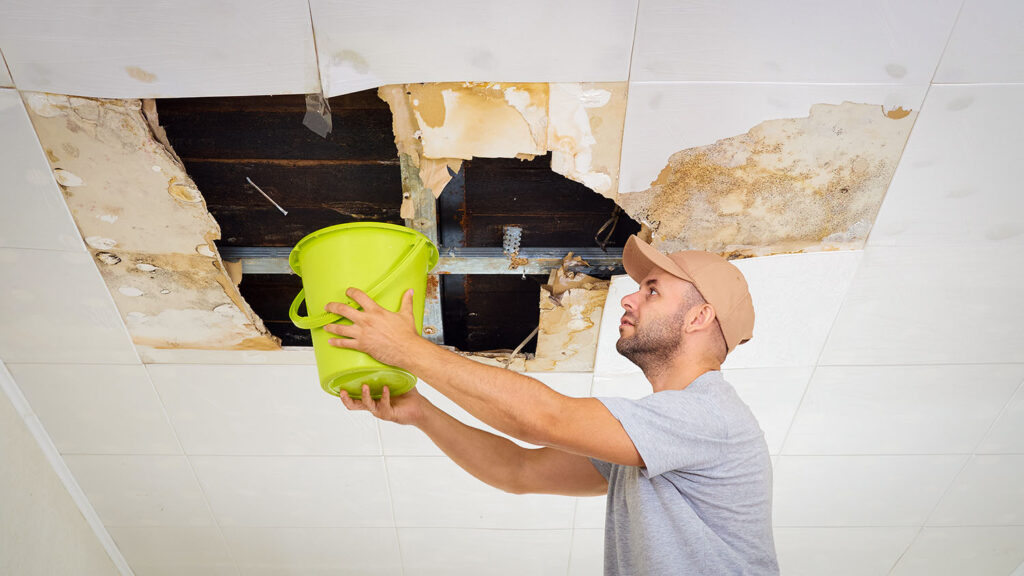
7 Warning Signs of a Commercial Roof Leak: A Facility Manager’s Guide
-
- In Commercial Roofing Facility Management
Commercial Roofing, Facility Management, Featured October 1, 2026 7 Warning Signs of a Commercial Roof Leak: A Facility Manager’s Guide A commercial roof leak can quickly turn from a minor maintenance issue into a costly facility problem. Water intrusion can damage building materials, disrupt operations, affect equipment, and create potential safety concerns for employees and visitors. For facility managers and property owners, knowing how to recognize the early warning signs of a leaking commercial roof is an important part of protecting the building and avoiding more extensive repairs. At Connect Service Solutions, we understand that maintaining a facility requires looking at the entire building—not just one system. Recognizing potential roof problems early and taking the appropriate next steps can help minimize damage, protect operations, and extend the service life of your facility. Here are seven common signs that could indicate your commercial roof is leaking. 1. Water Stains on Ceilings or Walls One of the most recognizable signs of a commercial roof leak is discoloration on ceilings, walls, or ceiling tiles. Brown, yellow, or rust-colored stains may indicate that water has entered the roofing system and traveled into the building. Because water can move along roof decks, structural components, pipes, and other building materials before becoming visible, the location of a stain does not always identify the source of the leak. Areas to Inspect Pay particular attention to: Areas directly beneath the roof Corners where walls and ceilings meet Ceiling tiles and suspended ceiling systems Areas surrounding HVAC units Roof penetrations, pipes, vents, and equipment Previous leak or repair locations If you notice water stains, document their location and appearance. Photos can help maintenance teams track whether the affected area is changing over time and provide valuable information during a professional commercial roof inspection. 2. Standing Water or Active Dripping Inside the Facility Active dripping or water pooling inside a building is a clear indication that water intrusion needs immediate attention. Commercial roofing systems can be complex, and the point where water appears inside the facility may be several feet—or even farther—from the actual source of the roof leak. Water can travel along structural components, insulation, decking, and mechanical systems before reaching an interior space. This can make commercial roof leak detection difficult without a thorough inspection. What to Do If active water intrusion is discovered: Protect people and equipment in the affected area Move valuable materials when it is safe to do so Use containers to collect dripping water Mark or document affected areas Contact a qualified commercial roofing professional Prompt action can help reduce interior damage and minimize disruption to your facility. 3. Persistent Musty or Damp Odors Not every commercial roof leak produces visible water immediately. A persistent musty or damp smell can indicate moisture trapped above ceilings, inside walls, or within the roofing and insulation systems. Because commercial roofs often contain multiple layers of insulation and other materials, moisture may remain hidden for an extended period before visible damage appears. Areas Where Hidden Moisture May Develop Check: Storage rooms Mechanical and utility spaces Areas above suspended ceilings Spaces with limited ventilation Areas surrounding rooftop HVAC equipment Locations with a history of water intrusion If an unexplained odor persists, a professional roof and moisture assessment may help determine whether hidden water intrusion is contributing to the problem. 4. Unusual Exterior Growth or Moisture Patterns Signs of a roof problem are not always found inside the building. Unusual concentrations of moss, mildew, algae, or vegetation around exterior walls, drainage systems, or rooflines may indicate areas where moisture is consistently collecting. Facility teams should pay close attention to: Gutters and downspouts Roof drains Scuppers Drainage outlets Exterior walls near rooflines Areas with concentrated vegetation or mildew Locations where water does not drain properly These conditions do not automatically mean the roof is leaking, but they can indicate drainage or moisture problems that warrant further inspection. Routine exterior inspections can help identify potential commercial roofing issues before they result in interior water damage. 5. Unexpected Changes in Energy Costs An increase in heating or cooling costs may have several causes, but roof-related moisture is one possibility that facility managers should consider. When water enters a roofing system and saturates insulation, the insulation may become less effective. That can make it more difficult for the building to maintain consistent indoor temperatures and may cause HVAC systems to work harder. Potential indicators include: Unexplained increases in utility costs Difficulty maintaining consistent temperatures Hot or cold areas within the facility Wet or damaged roof insulation Changes in HVAC runtime or performance Energy performance alone cannot confirm a roof leak. However, when higher utility costs occur alongside other signs of roof water damage, a commercial roof inspection may be appropriate. 6. Electrical Problems Near Areas of Water Intrusion Water and electrical systems can create serious safety hazards. If electrical issues occur near an area where a commercial roof leak is suspected, the situation should be treated carefully and addressed by qualified professionals. Warning signs may include: Flickering lights Repeatedly tripped breakers Equipment malfunctions Unusual electrical odors or sounds Visible water near electrical equipment, outlets, or wiring Do not attempt to investigate electrical components exposed to water unless you are trained and authorized to do so. Restrict access to the affected area and contact the appropriate electrical and roofing professionals to evaluate the situation safely. 7. Deteriorating Building Materials Visible deterioration of interior building materials can indicate that water intrusion has been occurring for some time. Common examples include: Sagging ceiling tiles Peeling or bubbling paint Warped wall panels Damaged drywall Deteriorating insulation Stained or damaged flooring Corrosion on metal components These conditions may indicate that moisture has moved beyond the roof assembly and begun affecting other parts of the facility. The longer water intrusion continues, the greater the potential for damage to roofing components, insulation, interior finishes, equipment, and other building systems. What Should You Do When You Find a Commercial Roof Leak? Finding a leak is only the first step. A clear
Read More